Sunday, 1 November 2026

Why Dropping Scores Shapes Starting Strategy in Rally Deciders

Editorial illustration of an abstract motorsport news graphic for ERC: Titles and pride at stake on season showdown

Understanding Championship Position Before the Opening Stage

In rally championships, a driver's competitive position heading into a weekend often depends on mathematical regulations just as much as stage pace. When competitors line up for a season finale, scoring systems such as drop-score rules dictate how much ground someone actually needs to defend or recover, shaping their strategic posture from the first competitive kilometre.

How Score Deductions Alter the Target

The dynamics of the 2026 European Rally Championship gravel finale illustrate how these pre-event standings function. Heading into the final round at Rally 6 Cities North of Portugal, Andrea Mabellini held an eight-point margin over Miko Marczyk for second overall behind champion Teemu Suninen. Because Marczyk faced the prospect of discarding his lowest season score—a seven-point result—while Mabellini had no deduction to discard, the Italian arrived with a distinct mathematical cushion.

Starting Approach in a Crowded Field

In the context of the ERC Portugal finale: Mabellini carried the tactical benefit of not having to outscore his rival outright on stage times alone to preserve the runner-up spot, though no exact finishing permutation was pre-determined. With 31 Rally2 competitors entered over 17 gravel stages, navigating traffic and variable late-October weather meant managing position rather than risking an outright rally victory was the primary operational target.

Official reference: FIA’s event preview.

What Red-Hot Brake Discs Reveal About Stopping a Modern Race Car

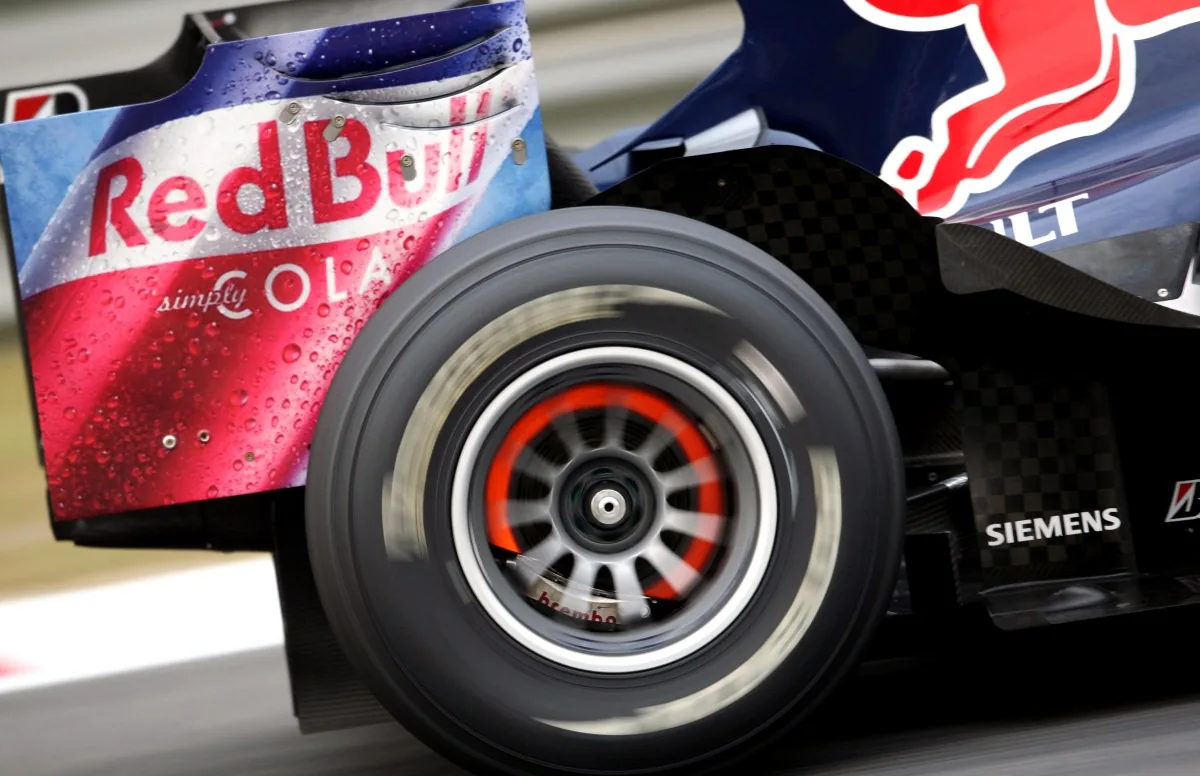
Close-up of a Red Bull-liveried Formula 1 car’s wheel, showing a red-orange glowing brake disc behind the blurred spokes.

Friction and Visible Heat

When modern racing machinery decelerates from high speeds into a tight corner, the kinetic energy of the car is converted directly into thermal energy across the braking assembly. As friction builds between the pads and the rotors, the carbon components reach temperatures intense enough to emit visible light. Understanding Why F1 brake discs glow red comes down to thermal radiation rather than mechanical distress, as the material simply radiates the energy generated during heavy deceleration.

Operating Windows and Thermal Management

Race-specification carbon-carbon brakes operate very differently from standard road car equipment. In motorsport contexts, carbon brakes are known to perform poorly when cold, meaning teams must deliberately keep them within a targeted thermal window rather than striving to run them as cool as possible. Historical technical accounts from 2014 and endurance racing data note that carbon discs can begin exhibiting a visible reddish glow around 600°C, with severe stops driving temperatures above 1,000°C or even exceeding 1,200°C under maximum load. However, these specific figures reflect distinct contextual benchmarks rather than universal thresholds for every circuit or car configuration.

Normal Function Versus Overheating

A bright glow at corner entry does not signify an imminent component failure. In circuit racing, a reddening disc is an expected reaction as long as internal temperatures stay within the hardware's designed operating boundaries. Cooling ventilation holes drilled throughout the discs help shed excess heat between braking events. Thermal problems arise only when temperatures exceed those safe design tolerances or fail to dissipate adequately, which accelerates wear on the friction surfaces and compromises braking efficiency.

Official reference: Formula 1 official news and results.

Saturday, 31 October 2026

How Formula 1 Stewarding Rulings and Conduct Shape Career Legacies

Three dark helmet symbols numbered 1, 2 and 3 beside the text “Top 10 Most Controversial F1 Drivers of All Time (2025 Edition)” on a cream background.

Off-Track Scrutiny and Disciplinary Rulings

Formula 1 history demonstrates that official oversight extends well beyond on-track incidents to cover how drivers interact with officials and follow sporting guidelines. Retrospective analyses like the Top 10 Most Controversial F1 Drivers of All Time (2025 Edition) illustrate how actions outside wheel-to-wheel battles impact sporting records, such as Lewis Hamilton facing disqualification in 2009 for misleading stewards or encountering scrutiny during disputes with the FIA regarding jewelry rules.

Sporting conduct also encompasses personal behavior and public statements. Former champion Nelson Piquet drew wide controversy away from competition over racist remarks directed at Hamilton, while James Hunt faced disciplinary attention after striking a marshal following a crash, showing that governing bodies evaluate conduct outside the cockpit as strictly as race maneuvers.

Championship Deciders and Strategic Disputes

Titular outcomes have frequently been shaped by contentious crashes and severe penalties handed down by officials. Michael Schumacher received an overall disqualification from the 1997 World Championship after colliding with Jacques Villeneuve, an action characterized by analysts as intentional, just as Ayrton Senna acknowledged his 1990 collision with Alain Prost at Suzuka was deliberate retaliation.

In other cases, external race direction decisions rather than driver misconduct altered championship dynamics. The disputed 2021 title decider in Abu Dhabi saw race director Michael Masi make the critical safety-car intervention; while the FIA later acknowledged human error in that procedure, Max Verstappen retained the championship title.

Official reference: Formula 1 official news and results.

How Qualifying Results Shape the Saturday Media Schedule in Formula 1

Editorial illustration of a stylised microphone and speech bubbles for United States GP: Newey, McNish and Budkowski named for Friday press conference

Performance Determines Post-Session Media Appearances

During a Formula 1 Grand Prix weekend, media responsibilities shift from pre-arranged promotional slots to performance-based debriefs once competitive running begins. Prior to on-track action, governing bodies assign drivers and team figures to specific interview sessions. For instance, the 2026 United States GP: Newey, McNish and Budkowski were scheduled alongside driver appearances across Thursday and Friday before track results dictated media requirements.

Once qualifying concludes, attendance in the official post-session press conference is earned strictly by lap times rather than advance scheduling. The three fastest qualifiers from Saturday afternoon secure the speaking spots to discuss starting positions, grid positioning, and their outlook for Sunday. Formula 1 timetabled the Saturday qualifying run in Austin for 16:00 to 17:00 local time, directly leading into a 17:00 to 18:00 media window for those top three drivers.

The Transition from Grid Allocation to Race Day

Securing a top-three spot in qualifying places a driver front and centre before the media, highlighting how critical the one-hour Saturday session is for establishing weekend momentum. However, starting positions earned on Saturday do not carry over to Sunday's media duties. The post-race conference shifts entirely to Grand Prix results, featuring only the first three race finishers regardless of who claimed pole position.

Official reference: FIA's announcement, dated 21 October.

How MotoGP Sets Starting Grids for Red Flag Restarts

Editorial illustration showing a red flag on a dark pole within a rounded beige panel, with a MotoGP restart rules title to the right.

Original Qualifying Spots Versus Interrupted Race Positions

When an incident or weather stops a MotoGP Grand Prix before the scheduled distance, starting positions for the resumption depend directly on how many laps the leader finished before the stoppage. Under the sporting regulations updated in September 2026, the threshold dividing a clean slate from an order based on running positions is three completed leader laps.

If the leader completes fewer than three laps before an interruption, the original running is declared void and treated as a completely new race. In that scenario, riders return to their original starting grid determined by qualifying, and any pre-race grid penalties apply once again to that second start.

Grid Eligibility After Three Completed Laps

The situation changes significantly once the leader has completed at least three laps without reaching the rounded-down three-quarters distance required to declare the event finished. Under official MotoGP red flag restart rules, the grid for the restart is formed using the classification from the interrupted segment rather than the original qualifying results, and original start-position penalties already served are treated as completed.

Only riders classified from that first portion are allowed to take the restart. Classification requires a rider to have been actively competing when the red signal appeared and to bring their motorcycle across the pit-entry timing line within five minutes, unless granted an exemption under exceptional circumstances. Riders classified one full lap behind the leader must take the restart from pit lane, while anyone two or more laps down is barred from restarting entirely.

Official reference: official red flag guide.

How MotoGP Yellow Flags Influence Starting Grids and Race Overtakes

Illustrated yellow flag on a dark pole in a rounded beige panel, with a heading to the right.

Practice, Qualifying, and Lap Time Cancellation

In MotoGP track sessions leading up to the race, yellow flags carry immediate consequences for lap times and eventual grid spots. When marshals display a yellow flag or signal panel during practice and warm-up sessions, any rider who passes through that sector automatically has their current lap time deleted. This cancellation applies regardless of whether the rider overtakes anyone, making safety and caution mandatory whenever a incident occurs beside or on the circuit.

Understanding the Overtaking Prohibition

During a race, passing is strictly forbidden through any yellow-controlled zone until riders cross the specific point where a green flag or green light panel is displayed. Simply clearing the damaged motorcycle or rider does not allow racing to resume. Under the MotoGP yellow flag overtaking rules, competitors must slow down and proceed cautiously, whether signals indicate danger beside the circuit via a single yellow or a track blockage signified by double yellow flags.

Should a rider inadvertently pass another competitor under caution, they can avoid disciplinary action by immediately and intentionally yielding the place back to every rider they overtook. If an infraction stands, race control communicates the sanction through the rider's dashboard display and timing screens, starting the compliance countdown at the subsequent crossing of the finish line.

Official reference: danger ahead beside the track.

How MotoGP Blue Flags Work Across Races, Practice, and Pit Exit

Editorial illustration with a blue flag in a rounded beige panel on the left and a heading on the right.

Overtaking warnings beyond the race leader

In Grand Prix motorcycle racing, a blue flag indicates to a competitor that a faster bike is approaching from behind. Under official MotoGP blue flag rules, a rider being lapped during a grand prix must permit every lapping rider to pass at the earliest opportunity, rather than only yielding to the race leader. Furthermore, riders navigating a lapped group are strictly barred from overtaking one another while under the blue flag condition. The regulations do not dictate a specific manoeuvre or set number of turns for yielding, nor does general series guidance detail an automatic penalty for non-compliance, though riders can be penalised for ignoring on-track flag signals.

Non-race sessions and pit-lane duties

The signal serves distinct operational duties outside of grand prix lapping situations. In practice sessions, displaying blue instructs a rider to let a quicker machine through and explicitly prohibits cruising slowly on the racing line where it could disrupt another competitor's flying effort. At pit exit, a dedicated flag post shows blue to alert an exiting machine that live track traffic is bearing down, requiring the rider to merge smoothly without disturbing oncoming bikes.

The joint chequered flag procedure

A specialised scenario occurs when backmarkers circulate closely ahead of the leader crossing the line on the final lap. In this instance, track marshals display both the chequered flag and the blue flag simultaneously at the finish line. This combined signal indicates that the race leader has completed the contest, whereas the preceding riders caught in that pocket must tour the circuit for one additional lap to take their own chequered flag.

Official reference: MotoGP’s official flag guide.