Age and Longevity at the Pinnacle of Motorsport
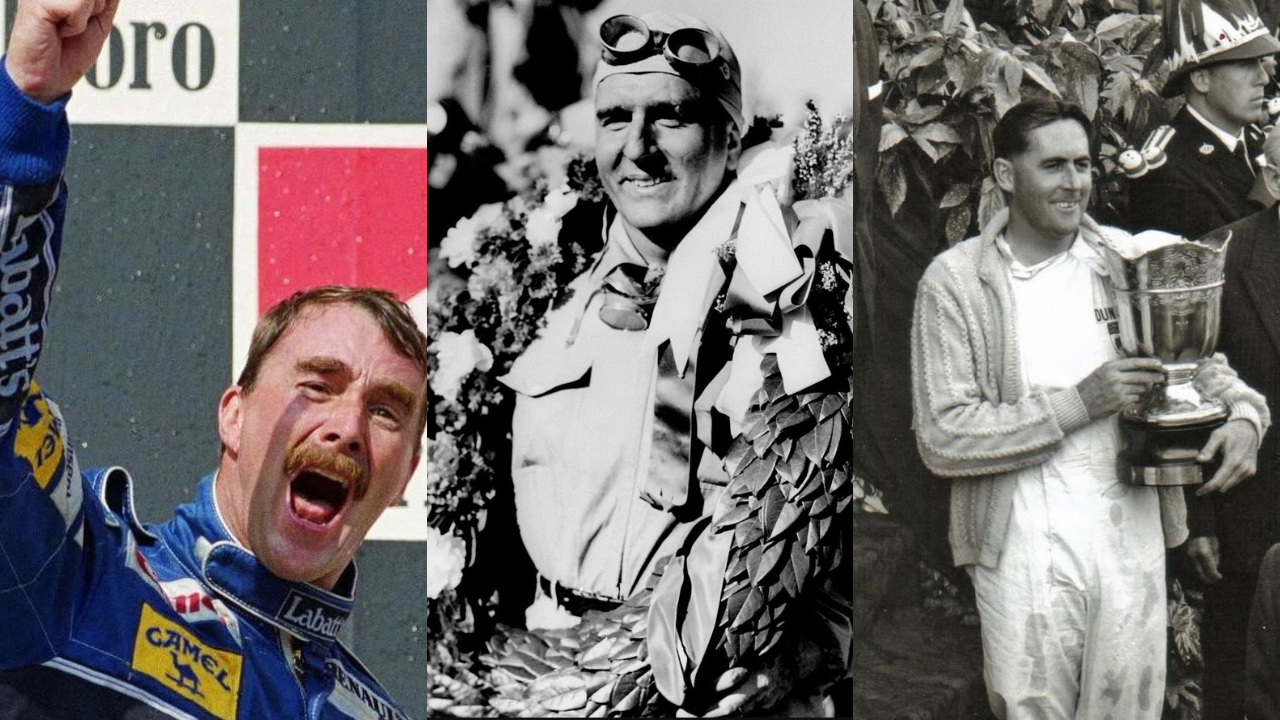
In Formula 1 history, securing a world title requires sustained performance across an entire calendar, a challenge managed by drivers at very different stages of their careers. Examining the Top 5 oldest F1 world champions highlights how longevity shaped the sport across different decades, ranging from the inaugural 1950 season to the modern era.
Juan Manuel Fangio leads this group after taking his fifth championship in 1957 at 46 years and 41 days old, with all five of his titles won in his 40s. He is joined by 1950 inaugural champion Giuseppe Farina at 43, three-time champion Jack Brabham at 40 in 1966, and Graham Hill, who earned his 1968 crown at age 39.
First Titles Later in a Career
While drivers like Fangio, Brabham, and Hill built upon previous title victories late in their racing careers, Nigel Mansell stands out as securing his maiden drivers' championship in 1992 just eight days after turning 39. His victory in the Williams FW14B followed three earlier runner-up championship finishes in 1986, 1987, and 1991, demonstrating how prolonged competitiveness across multiple seasons can culminate in championship success.
Official reference: Formula 1’s historical ranking.

No comments:
Post a Comment