A Safety Signal for Mechanical Danger
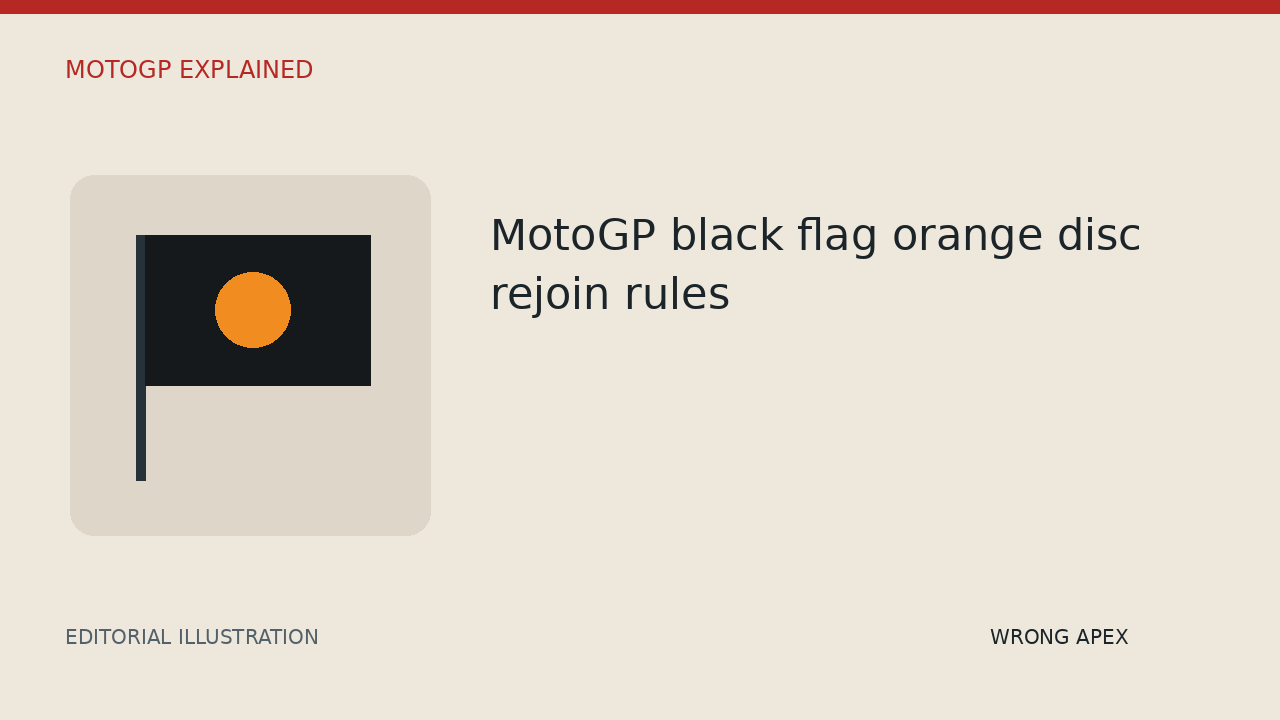
During MotoGP sessions, race direction monitors machines closely for dangerous mechanical defects such as fluid leaks or loose bodywork that could endanger the rider or rivals. When officials detect such a threat, they display a black flag featuring a prominent orange disc alongside the affected rider's competition number, or trigger equivalent digital trackside light panels. Unlike an outright disqualification, this visual order specifically targets hazardous mechanical faults rather than sporting infringements.
Immediate Exit and Inspection Requirements
A rider shown this signal must leave the circuit immediately rather than continuing around to complete their lap. Under FIM regulations, clearing the track and fixing the mechanical fault in the pit lane does not automatically clear the machine for competition. According to the official MotoGP black flag orange disc rejoin rules, a rider can only return to the circuit once an official inspects the bike and grants explicit authorisation to rejoin the session.
How It Differs From a Solid Black Flag
Viewers often confuse the orange disc with a standard black flag, but their procedures and consequences are distinct. A solid black flag issued for a disciplinary penalty orders the rider to pull into the pits at the end of their current lap, prohibiting any restart. In contrast, the orange disc is a conditional safety intervention that permits returning to the track once track marshals and technical delegates verify the danger has been resolved.
Official reference: official MotoGP guide to flag meanings.

No comments:
Post a Comment